Classes

Showing posts with label Apply a Variety of Technologies. Show all posts

Sunday, 23 April 2017

Mom, Distractions and Technology, and Doctor Who


I have a deep love and appreciation for my mom.  She has always been a great sounding board for my plans and schemes and a tremendous support for me personally and professionally.  On occasion she will send me links to articles or other cool ideas that she thinks might be of interest to me.  Today she sent me a link to a Master's Project by Patrick Tolman that examines the issue of technology usage and how it can be used to help at-risk high school students.  Coming in a hefty 198 pages, the whole thing might not pique the interest of every reader but there were a few points that stood out to me that I will attempt to describe a bit below.

Teachers have to deal with some sort of distraction on a daily basis.  This is increasingly true of the mobile devices that have become so essential in our society.  I've struggled with this a great deal in recent years.  While I LOVE using technology and the cool things that I can do for myself or with my students, there will always be those who are more interested in the games and social media interactions that are all around us.  Many of my colleagues and I regularly discuss the challenges that we have in restricting or even removing devices.  Tolman argues, though, that "removing the devices only gives ... students an additional reason to detach from their educational experience."

In an effort to avoid confrontation, I've tried to find some sort of balance: all devices must be put away when I am giving instructions to the group.  (Edutopia recently put out a video referring to this as 'professional courtesy.')


Once instructions have been given, students are free to work AND use their devices provided they aren't being a distraction for others or themselves.  Those students who choose to remain off-task will have devices taken away.  I'm not perfect at this but many students have begun to at least be aware of the need to regulate what they are doing while in class... at least when I can see them.

Perhaps one of the biggest points that grabbed my attention what what Tolman referred to as FoMA or the fear of missing out.  Social media has created a platform for people to share the experiences that they are having with a much larger audience than just their immediate circle of friends.  Many get hooked on being a part of the action, even if only through a text, Snapchat, or video.  The idea that someone else might be doing something fun or exciting without them is one of the biggest reasons that I see for people 'needing' to be on their phones.  Even when I have claimed a phone or two for a class, some students have really struggled with the thought that they're missing out somehow.  This goes back to the whole distraction piece mentioned above.

So. How do we turn this challenge into an opportunity?  In short, Tolman points out that teachers need to consider a few things:

  • we should not have technology use for the sake of technology use; we cannot assume assume that simply using technology will lead to further learning
  • students should be able to have some input into how their devices are used; they want to use their devices and having a sense of ownership over their education may lead to greater engagement
  • technology use should be targeted to specific purposes within the classroom; there should be a goal in mind and students should be exposed to different programs and apps that might be helpful
He concludes his project by providing a number of lesson plans that have been tailored to include more specific uses of technology.  Tolman argues that by changing his perspective, he was able "to turn a classroom frustration (distracted cell phone usage) into a benefit.  I'm looking at this more in the same way that I will be considering presentational hooks... instead of fighting it, I can be looking for ways to incorporate mobile phones meaningfully into our learning activities.

My summary above might not be the most clear or helpful, so again I recommend skimming looking through the article on their own.

Thanks, mom.


Doctor Who

I don't always follow sports religiously during the regular season but playoff hockey has become a bit of an obsession since I was in Edmonton for the last Oiler's run in 2006.  That means that I'm behind on one or two shows (thank you, PVR) including this one.


I've been encouraged by early reviews so far as I was a lot more confused by the last season than I would have liked to have been been.  I suppose this can be my last hurrah before returning to the regular routine tomorrow.

No spoilers.  ;)

~MrT

Friday, 10 February 2017

Quick Thoughts on Getting Back...


Once again, I find myself as a lapsed blogger.  Truthfully, there were many times when I really tried to find the will to sit down and reflect but... (insert poor excuse here).  If I'm being honest, though, the biggest inspiration as of late has been my own wife who has really taken a liking to the craft.  While I can take credit for helping to introduce her to the bells and whistles of blogger, and regularly provide valuable tech support, she has an ability with words that I remain envious of.  Feel free to check out her thoughts here.

My early offerings might be light until I get back into that blogging groove, but here we go...


Gamer Brain

I recently came across an article on Edutopia that addressed some of the bigger ideas behind gamification and how they can be effectively used within the classroom.  In particular, the author address four main points:

  • Leveraging the Gamer Brain... identifying the types of games that students enjoy and crafting learning objectives that can tap into that interest
  • Embracing Failure... recognizing that most games provide regular and timely feedback about what is going well and not-so-well; evaluating assessment practices to ensure that students can learn in the same efficient manner
  • Celebrating Epic Wins... getting excited over 'Fiero' or the feeling of triumph over adversity; students need to be challenged but they also need to feel the win
  • Fostering Voluntary Learning... most of us play games because we want to and not because we have to; teachers need to strive to create an environment that invites wilful participation in spite of being so regularly mandated and structured
There is a tremendous demand in my school for gaming.  I continue to host my school's eSports Club several times a week and the numbers continue to steadily grow.  In addition, a 'Gaming 101' option as FLEX Learning for Middle School received likely the greatest number of interested students.  

The challenge remains to have this be about more than just playing games.  This needs to be about recreating the learning and interaction found in most board and video games.

More to come...


Oooo... A New Toy!!

It's no shock that I've been into gaming for most of my life.  And I'm a sucker when it comes to new experiences that allow me to continue enjoying the pastime in ways I couldn't before.

Despite some initial reservations, I managed to secure a pre-order for the Nintendo Switch.  Of course I have selfish reasons to do so, but I'm also intrigued by the portability aspect and ways that I can share the experience with others, including my classroom.

Less than a month to go...


~Mr. T

Monday, 7 March 2016

Gamification and Student Buy-In


I took a longer break from blogging then I was planning on, mainly because I got caught in that trap of looking for wider relevance and therefore sat down and have written, re-written, and scrapped this post a number of times.  I really don't want this pattern to take hold again so I told myself that I just needed to get some quick thoughts down and move on.

I recently came across a post from Vicki Davis who talked briefly about gamification in classrooms.  For the uninitiated, this refers to the application of traditional gameplay elements within regular school routines.  Having grown up playing a lot of games, board- and card-based and electronic, this seemed like something right up my alley.  My thinking was that if I loved playing games and I saw that lots of my students also loved playing games, this would be fairly easy to implement.

I was wrong.

Don't get me wrong, though, as I have had some successess in this area.  Last year, I started using ClassCraft as another layer on top of the work that we were already doing.  Students can receive XP for doing well on assignments or for demonstrating positive behaviour.  Likewise, they will receive small penalties for not completing assignments or being a disruption.  However, I can't help but feel like I'm not really using this as well as I should.

Vicki Davis (courtesy of Kae Novak) wrote about the idea that gamification can't just be "chocolate on broccoli."  It can't just be throwing in meaningless points and rewards in addition to the work that needs to be done.  Instead, it has to become a complete approach overhaul to how classrooms are done in the first place.  I haven't really done this... I've merely thrown in the appearance of something new and exciting and the result has realistically been something of a casual level of tolerance.  "Oh, look.  Mr. Thompson's gave me points.  Or something."  This won't do.

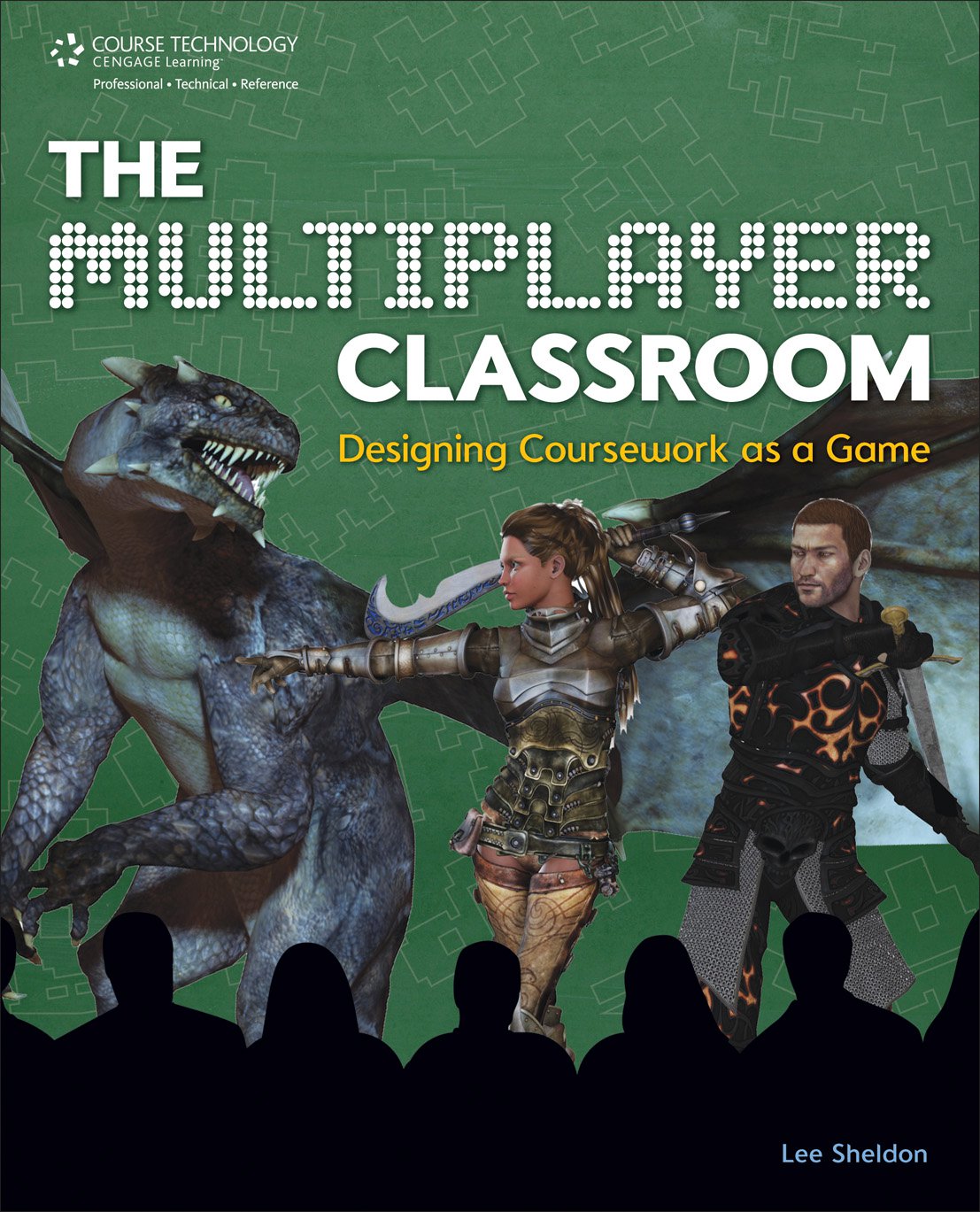
I've decided to look a little bit more into this, beginning with Lee Sheldon's book "The Multiplayer Classroom."  I also want to engage with my students on a more meaningful discussion about the kinds of things that they feel would make for a more relevant and enjoyable experience.  It's with this post that we're going to begin looking more at online commenting and the building of digital connections.

Here we go...


One More Cool Thing

I came across this a few days and have viewed it a few times.  Not only is the song one that I've found myself humming to myself every now and then, but I'm just amazed at the work that went into making this possible.


~Mr.T

Tuesday, 23 February 2016

Struggles and Reflection


I wish that I could always have great days as a teacher.  Like pretty much every other teacher out there, I love coming home feeling like I've made connections with my kids and that everything just clicked that day.  Truth be told, I probably have these kinds of days more often than I realize and even if they aren't perfect, there are still a lot of good things that happen that make everything worthwhile.  On the flip side, though, I have the occasional bad day.  These are the days when I feel like I'm the one who failed... maybe due to lack of planning, or patience, or something that just wasn't there the way it needed to be.  These days are pretty tough to take.

After our recent Teachers' Convention, I walked away feeling that I should at least be focusing more on making connections with course outcomes and helping students have greater clarity regarding my own expectations for them.  I came to school on Monday and spent time talking about the need to be equipped to solve the problems and challenges that we will be facing for what remains of the year.  I used 'The Witness' to demonstrate how frustrating it can be when you don't really know how to go about solving problems and how much easier and fulfilling it can be once we know what we need to do.  We then transitioned to the Grade 8 Language Arts Program of Studies and the curricular outcomes found there and got groups started on trying to make more sense of them.  I felt like most kids got what I was trying to say, and I looked forward to the further reflections that would be coming out of our revamped blogging.

Today did not quite go the way I had planned.  While I won't say that the day was a total loss (we still got our work done), it was one of those days that left me feeling like I let myself down.  In this case, I was starting to feel that perhaps my own lofty ambitions were getting a little too far ahead of what I could reasonably expect my students to grasp.  I can sometimes be less patient than I ought to, and it is not unlikely that I was slightly less-than-welcoming of some legitimate concerns and questions than I should have been.  I kind of hate when I do that.

Failure and opposition can definitely be tough to take but more often than not, though, this is when I'm at my most reflective.  I don't say this to brag or to boast or to show off how contemplative and virtuous I am.  I mean to say that being knocked down a few notches reminds me of just how much I can't do on my own.  A little humility helps me to more effectively connect with others for support and look just a little bit harder for what I can do better.

Easier said than done to be sure, but a necessary step in this journey we find ourselves on.


The Plan For Tomorrow

I've been a stickler for good spelling since my time in elementary school when I was locked in a perpetual battle for spelling supremacy with one of my best friends who would always beat my by one or two points on our regular quizzes.  I guess in a lot of ways I've continued to feel that this matters and should be emphasized as a valuable skill.

Sticking to the theme of making connections, I'm going to try to have a little more fun tomorrow as we shore up our writing skills.  I remembered on my drive home reading about the efforts of a class in Brazil as they attempted to correct that they found in a variety of social media posts.  A brief write-up can be found here.

I've already sent out a request for a list of celebrities and popular figures from my classes.  We're going to get set up with correcting some of the mistakes that we can find, and maybe letting our 'friends' know ever-so-politely where some improvements could be made.

Now we just need a hashtag.


Mock House of Commons Debate

Feel my Bearded Fury!!
So.  I finally began our debate on the school's dress code today.  Each student in the class gave a brief statement in support of their party's general position, followed by open debate.  I won't lie... I wasn't really sure what to expect.  Planning for a debate is pretty tough to do because you don't really know what points are going to be brought up or how much people are going to buy in.  I can honestly say, though, that I was very impressed with a good portion of the class.  Not only were they reasonably well informed on the issue, but they were pretty engaged in the whole process.

And it didn't hurt that we had some pretty sweet 'mic drop' moments in the debate.

The plan was to be finished today but we ran out of time and there were lots of hands waiting to jump in.  We are extending the debate into tomorrow.

More to come.

~Mr.T

Friday, 19 February 2016

Teachers' Convention: Day 1


In my 8 years of teaching, I've been able to attend a number of Teachers' Conventions... each one filled with a variety of different sessions leaving me feeling anywhere from extremely bored to ecstatic and energized.  Understand that I'm not questioning the need for Teachers' Convention and the need for it in my own professional development.  I inevitably hope each year, though, that I can have more of the kinds of experiences that not only build me up but give me tangible steps for achieving relevant and realistic change within my classroom.

Today I had the opportunity to attend a keynote by George Couros, someone that I have previously followed on Twitter but hadn't really looked into all that much beyond knowing that he has been a big advocate for using technology to expand learning and innovation within the classroom.  Without going into too many specifics, his presentation focused a lot of how educators need to embrace a growth mindset, focus on building resiliency, and build meaningful relationships with students through empathy and trust.  On the whole, it was one of the better presentations that I've been to over the many Teachers' Conventions that I have attended.  While I can't say that I agree with absolutely everything that was shared, I had a lot of moments while listening where I was asking myself questions about how I could do things just a little bit differently.

First off, I can't really disagree with the desire presented that sees technology as a way to empower kids.  I love using it myself because of what it allows me to do and the connections that I can make with a much larger community.  For many students, the power given to them through a smartphone, ChromeBook, and the Internet as a whole is incredible.  My earliest exposure to the Internet mainly involved playing Warcraft II and tying up the family phone line (much to the dismay of my parents) or taking 15 to 20 minutes to download songs on Napster.  Times have changed more than somewhat.

In discussing the presentation with some colleagues, we were pretty much on the same page in terms of recognizing these benefits.  However, we weren't as universally optimistic about the prospect of having unrestricted access to technology.  We were shown examples of schools where there aren't restrictions on device usage and told of the advantages of trusting our students to do what they should be doing.  I love the enthusiasm... but I'm still struggling with how to reconcile these good intentions with my own overly practical observations.  

Take cell phone usage as one example.  The message from the presentation was that we aren't doing anyone any favours by having penalties for using cell phones and technology.  Right off the bat, we were told, this creates a feeling of distrust: we can't possibly have our students govern their own use of cell phones so we need to do it for them.  In a perfect world, I'd love to be able to trust that each of my students can stay on-task and pursue their own learning and complete their work.  However, what I usually see when many students have that kind of freedom is that they will use that to do something else like play Agar.io or some other game, send a few texts or Snapchats, or something else that doesn't necessarily have a whole lot to do with the task at hand.

Naturally, this gets me thinking about what it is that I'm asking them to do.  There was one key question that Mr. Couros shared with the audience that really stuck with me: Are students creating content in spite of or because of school?  I'm not going to lie and say that every single lesson and activity that I have in my classroom is fun and engaging and all too often I feel like I really have to push the content that needs to be taught as prescribed by the Program of Studies.  However, we were also challenged to give students the chance to make connections for themselves if we're going to establish something more relevant for them.

It's still tough for me to process all my thinking and reflection at this point.  I have concerns, yes, but at the end of the day I'm probably asking the kinds of questions that need to be asked if I'm to grow and develop professionally.  You'll likely read more about this as I can do a better job organizing my thoughts into some sort of plan.


Another One of Those Super Good Commercials

I started watching the newest season of Survivor after a few years of a break.  During one commercial break, they showed this ad and I just thought it was awesome.  

I'm going to let it speak for itself.


There's a pretty powerful and simple message here that can be applied into more than just your phone's operating system (Android is better, by the way...).  I'm excited to show this to my students and see what they think about it.

There's also a behind-the-scenes video that I quite liked, having played piano and being involved in music for most of my life.  That a piano had to be made from scratch in order to meet the demands of the ad was pretty impressive.


Other Thoughts from Teachers' Convention

Here are a few other thoughts that stood out to me after attending a session on using blogging to create a digital portfolio.
  • linking blog entries to the Teaching Quality Standard; making some connection to what we are expected to do as professionals
  • Blogging is about making connections... students can and should be encouraged to link blog content to their different course outcomes
  • The process involves 4 steps: Write, Categorize, Tag, and Publish
  • This is a process that is continually evolving and can be something that students and staff do over years
  • I need to look a bit more into wordpress and Edublogs for next year and see if those can't be used more effectively than what I'm doing here in Blogger
  • I don't use Twitter as much as I should in part because it can be a bit overwhelming to sift through all the information... I really, really like Tweetdeck now
More to come...

~Mr.T